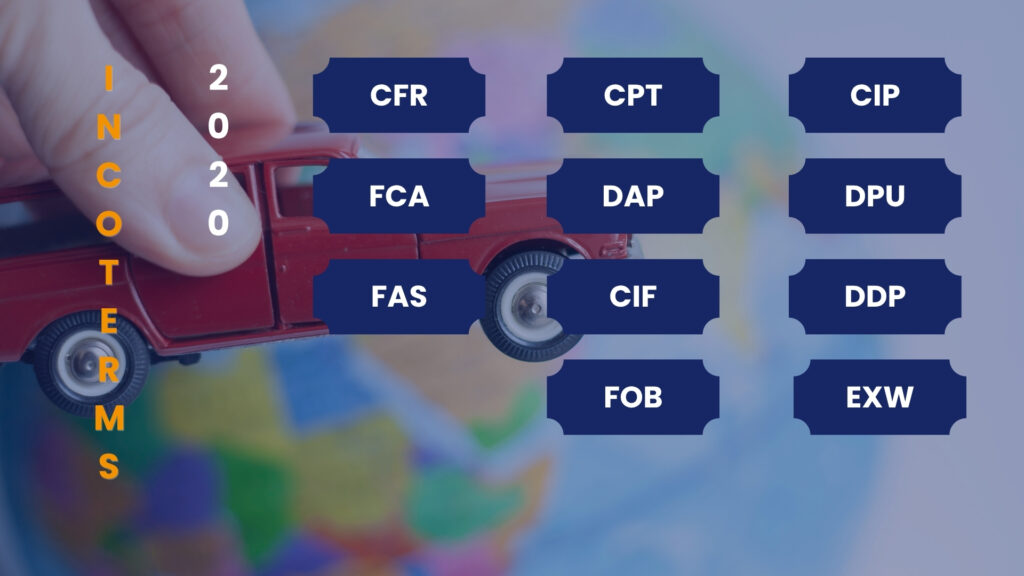
Incoterms 2026 is one of the most searched trade terms of the year, and it points to a rulebook that does not exist. If you import or export goods you meet EXW, FCA, FOB, DAP, DDP or CIF on almost every commercial invoice, and as a result the wrong one turns into an unexpected duty bill or a pallet nobody insured. This guide covers which edition actually applies in 2026, what the 11 rules decide, how to choose, and the mistakes that cost shippers the most.
Is there an Incoterms 2026 edition?
No. The International Chamber of Commerce has not published an Incoterms 2026 edition. The current rules are the ICC Incoterms 2020 rules, in force since 1 January 2020, and they govern contracts signed in 2026. Therefore, name the edition in writing, for example “DAP Rotterdam, Incoterms 2020”, so both parties know which rulebook applies.
- There is no Incoterms 2026 edition. Incoterms 2020 is the current ICC edition and applies throughout 2026.
- 11 rules: seven for any mode (EXW, FCA, CPT, CIP, DAP, DPU, DDP) and four for sea and inland waterway (FAS, FOB, CFR, CIF).
- Only CIP and CIF oblige the seller to insure the cargo. However, CIP requires all-risks cover under Institute Cargo Clauses A, while CIF requires only the minimum cover under Clauses C.
- Portex Logistics is an AEO-certified Rotterdam forwarder arranging road freight and customs clearance on the Netherlands and Belgium to Iberia lanes.
Are there Incoterms 2026?
No, there is no Incoterms 2026 edition, and a contract citing one refers to a rulebook that has never been published. That is because the rules are written and owned by the International Chamber of Commerce, which revises them roughly once a decade: 2000, 2010, then 2020. Incoterms 2020 entered into force on 1 January 2020 and still stands in 2026. Meanwhile, the next revision is generally expected around 2030.
The phrase survives because buyers assume the rules refresh yearly, like a tax table, and because publishers put the current year in their titles. Parties may still agree an older edition, which is why naming the year matters: “CIF Valencia” leaves it open, “CIF Valencia, Incoterms 2020” does not.
It also helps to know what these rules leave out. Incoterms allocate transport costs, delivery obligations, customs duties and the point where risk passes. Ownership, payment terms and remedies for breach belong in the sales contract instead.
What do the 11 Incoterms 2020 rules decide?
Each rule settles four practical questions: who pays the main carriage, who clears for export, who clears for import, and whether the seller must insure the cargo. All 11 rules, side by side:
| Rule | Transport mode | Carriage | Export clearance | Import clearance | Seller insures |
|---|---|---|---|---|---|
| EXW | Any | Buyer | Buyer | Buyer | No |
| FCA | Any | Buyer | Seller | Buyer | No |
| CPT | Any | Seller | Seller | Buyer | No |
| CIP | Any | Seller | Seller | Buyer | Yes, Clauses A |
| DAP | Any | Seller | Seller | Buyer | No |
| DPU | Any | Seller | Seller | Buyer | No |
| DDP | Any | Seller | Seller | Seller | No |
| FAS | Sea/waterway | Buyer | Seller | Buyer | No |
| FOB | Sea/waterway | Buyer | Seller | Buyer | No |
| CFR | Sea/waterway | Seller | Seller | Buyer | No |
| CIF | Sea/waterway | Seller | Seller | Buyer | Yes, Clauses C |
Please note: “Seller insures” means the rule itself obliges the seller to buy cargo cover. Under the other nine nobody is obliged to, so whoever carries the risk should insure separately. Under DAP, DPU and DDP that is the seller.
“Most of the disputes we get pulled into are not about the transport at all. They are about a three-letter code nobody checked. The buyer sees DDP on the order and assumes the duty is covered, and the seller has never registered to import in that country. Two minutes on the Incoterm at quotation stage saves a week of argument after delivery.”
Which Incoterms fit which transport mode?
Seven of the 11 rules work for any mode, including road, rail, air and multimodal, while four cover only sea and inland waterway transport. The split matters most for containers: FOB assumes loading on board a vessel, but a container is usually handed over at an inland depot days earlier, which is why FCA fits containers better.
Rules where the buyer controls the main carriage
- EXW, Ex Works. The seller only makes the goods available at their own premises. Therefore the buyer arranges loading, export formalities, carriage, import clearance and duties, which is heavy going without a presence in the seller’s country.
- FCA, Free Carrier. The seller hands the goods to a carrier nominated by the buyer and clears them for export; the buyer arranges the main carriage. In addition, Incoterms 2020 added an on-board bill of lading provision for letter-of-credit deals.
Rules where the seller controls the main carriage
- CPT, Carriage Paid To. The seller pays carriage to the named destination, but risk passes to the buyer as soon as the goods reach the first carrier.
- CIP, Carriage and Insurance Paid To. As CPT, but with all-risks cargo cover under Institute Cargo Clauses A, bought by the seller.
- DAP, Delivered at Place. The seller delivers to the agreed destination ready for unloading and carries the risk until then. The buyer, on the other hand, handles unloading, import clearance and duties.
- DPU, Delivered at Place Unloaded. As DAP, except the seller also unloads. In fact, it is the only rule obliging the seller to unload, and it replaced the former DAT in 2020.
- DDP, Delivered Duty Paid. The seller does everything, import clearance and duties included. Simple for the buyer, but demanding for the seller.
Four rules for sea and inland waterway freight
- FAS, Free Alongside Ship. The seller places the goods alongside the vessel at the named port. Useful for bulk and project cargo, although rarely for containers.
- FOB, Free on Board. The seller delivers on board and risk passes there. Well known, but widely misused for containerised freight.
- CFR, Cost and Freight. The seller pays freight to the destination port, but risk passes once the goods are on board at the port of shipment.
- CIF, Cost, Insurance and Freight. As CFR, plus seller-bought cargo insurance, but only the minimum cover of Institute Cargo Clauses C.
How do you choose the right Incoterm, step by step?
- Map the physical move first, noting where the goods start, where they must end up, and whether they travel as a container, a road trailer or bulk. In other words, the rule has to describe how the shipment actually moves, not the abbreviation you used last time.
- Decide who controls the main carriage, since the party with the better carrier access and rates should book it. Buyer control points to EXW, FCA, FAS or FOB; seller control to CPT, CIP, CFR, CIF, DAP, DPU or DDP.
- Split the customs work realistically, checking each side can clear what the rule assigns to it. For example, EXW leaves export formalities with a buyer who has no entity in the origin country, while DDP leaves import clearance with an unregistered seller.
- Separate cost from risk, looking at where risk transfers rather than only who pays freight. Under CPT and CFR the seller pays the carriage while the buyer carries the risk from handover, which is the gap most cargo claims fall into.
- Insure the gap and write it down, so whoever carries the risk arranges cover and the contract names both the place and the edition, for example “DAP Rotterdam, Incoterms 2020”.
Which Incoterms mistakes cost shippers the most?
In short, five mistakes cause most Incoterms disputes: assuming a 2026 edition exists, defaulting to FOB for containers, confusing who pays with who carries the risk, treating CIF and CIP insurance as equivalent, and agreeing DDP without checking local rules.
- Treating “Incoterms 2026” as a new edition. It is not one. Therefore, cite Incoterms 2020 in contracts, quotations and transport documents this year.
- Using FOB for every ocean shipment. FOB fits bulk and breakbulk loaded over the ship’s side. However, for containers FCA lines up far better with the real handover at the depot.
- Confusing cost with risk. In fact, a seller who pays the freight does not automatically carry the risk to destination. CPT and CFR are the clearest examples, and the difference only shows when a claim lands.
- Assuming CIF and CIP insure the same. They do not. CIP requires all-risks cover under Clauses A, while CIF requires only the minimum cover under Clauses C, a gap introduced deliberately in 2020.
- Offering DDP without checking local requirements. The seller must be able to act as importer and meet the customs and tax obligations in the destination country. Check that before quoting, not after.
How does your Incoterm change what a freight forwarder does?
The Incoterm tells your forwarder where to collect, where responsibility ends, which costs belong in the price and who files the customs declarations. Portex Logistics consolidates freight in Rotterdam and runs groupage and full loads between the Netherlands, Belgium, Spain and Portugal, so on a shipment agreed as “DAP Spain, Incoterms 2020” we collect at the seller’s premises, carry cost and risk to the named place, and leave import formalities with the buyer. Change it to DDP and the duty moves to our side of the invoice, which is why the three letters belong on the quotation request. Portex also handles international road transport and customs clearance under one roof. We are AEO-certified, a PANCO member, based in Rotterdam, and you are helped by a multilingual team (EN, NL, ES).
Want to read more? See our pages on transport to Spain and transport to Portugal.
Frequently asked questions
When is the next Incoterms edition expected?
Is FCA better than FOB for containers?
Who pays the freight under DAP?
Does DDP include customs duties?
Do Incoterms decide who owns the goods?